What's Special About Utsav Rock Garden ?

Spread across forty-five acres of lush land, Utsav Rock Garden has grown into a grand artistic wonder under the visionary guidance of Vedarani Dasnur. Today, it stands as one of the most well-known art destinations in Karnataka, blending painting, sculpture, architecture, literature, folklore, environment, and creative design into one magnificent space.

Under her leadership, Utsav Rock Garden has achieved eight world records, earning national recognition as a cultural and artistic landmark that attracts both rural and urban visitors alike. More than just an art park, it is a living expression of Karnataka’s creative spirit — offering a contemporary experience that celebrates craftsmanship, heritage, and imagination.

Every corner of Utsav Rock Garden reflects Vedarani’s continuous pursuit of innovation and artistic excellence. Art here is not stagnant or mass-produced — it is alive, evolving every day through her collaboration with talented artists. Together, they create new galleries, outdoor and indoor sculpture museums, and breathtaking installations that celebrate India’s cultural richness.

Playing such a multifaceted and creative role is a rare and challenging responsibility, especially for a woman — and Vedarani has fulfilled it with remarkable skill and dedication. She is the only woman in India engaged in creating large-scale, world-class contemporary sculpture museums that reflect both artistic and cultural depth.

As the founder and creative mother of this artistic village, Vedarani Dasnur has transformed Utsav Rock Garden into a vibrant world of art that revives and celebrates the fading heritage of rural India. Her vision redefines tourism — not merely as a source of entertainment, but as a powerful medium to preserve, promote, and pass on the nation’s cultural traditions to future generations.

Vedarani believes that art should not remain confined to an artist’s personal expression. Instead, it should represent the collective spirit of culture, empower artists economically, and serve as a medium of social and cultural harmony. Utsav Rock Garden stands as living proof of this vision — a place where art becomes service (Kala Dasoha), continuously spreading messages of peace, unity, and human connection.

Behind the incredible success of Utsav Rock Garden — where the essence of Karnataka’s folk life and identity is beautifully portrayed through thousands of sculptures — stands the creative force and dedication of Vedarani Dasnur.
Dr.Rajkumar Circle

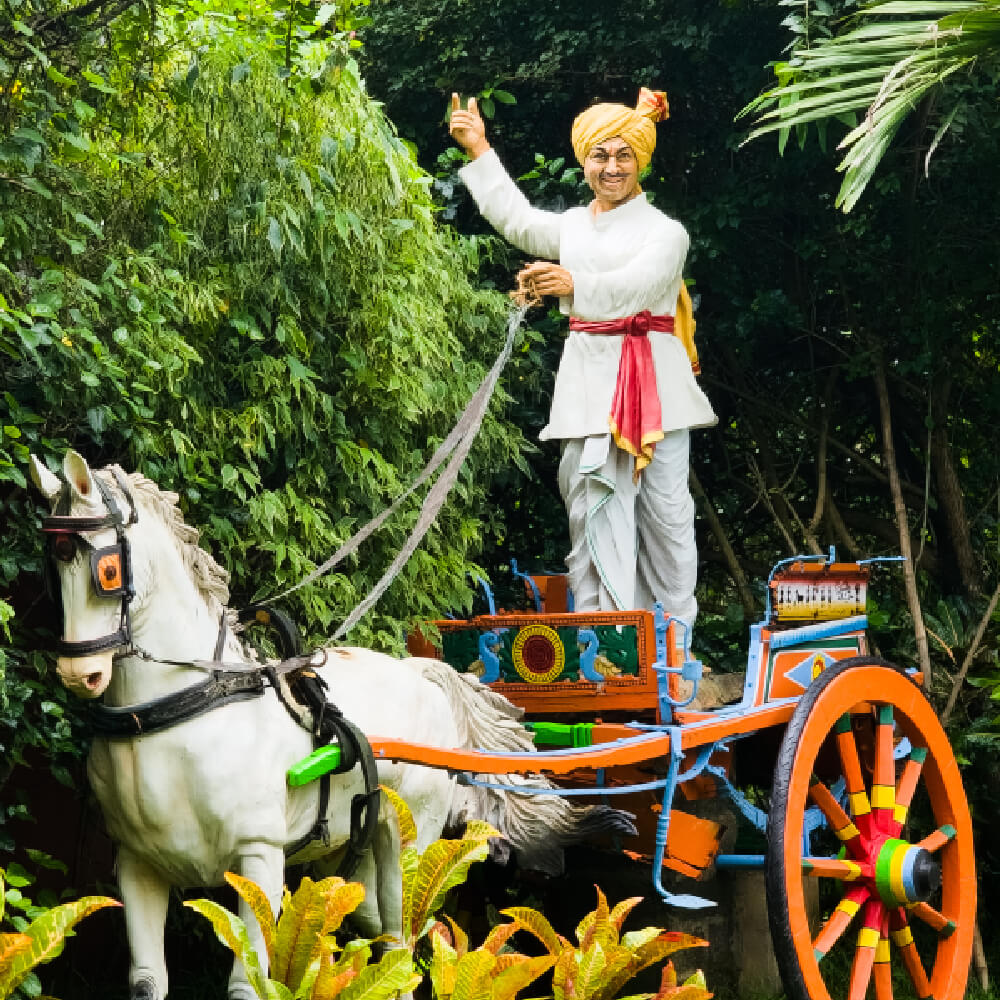
The moment you enter the Garden, you will be thrilled by the sculptures of Kannada film icon Dr.Rajkumar's statues. Each one of his movies gives a social message. Dr.Rajkumar, a cultural ambassador, widely acclaimed legendry soul of Karnataka whose panorama of scenes have been marvelously and adeptly portrayed through sculptures on high land and they offer festive pleasure to the visitors. Not only his Social, Mythological, Devotional characters are presented here but also his Yoga performing statues emphasize the importance and create awareness about yoga among the tourists.

Artistic Banyan Tree

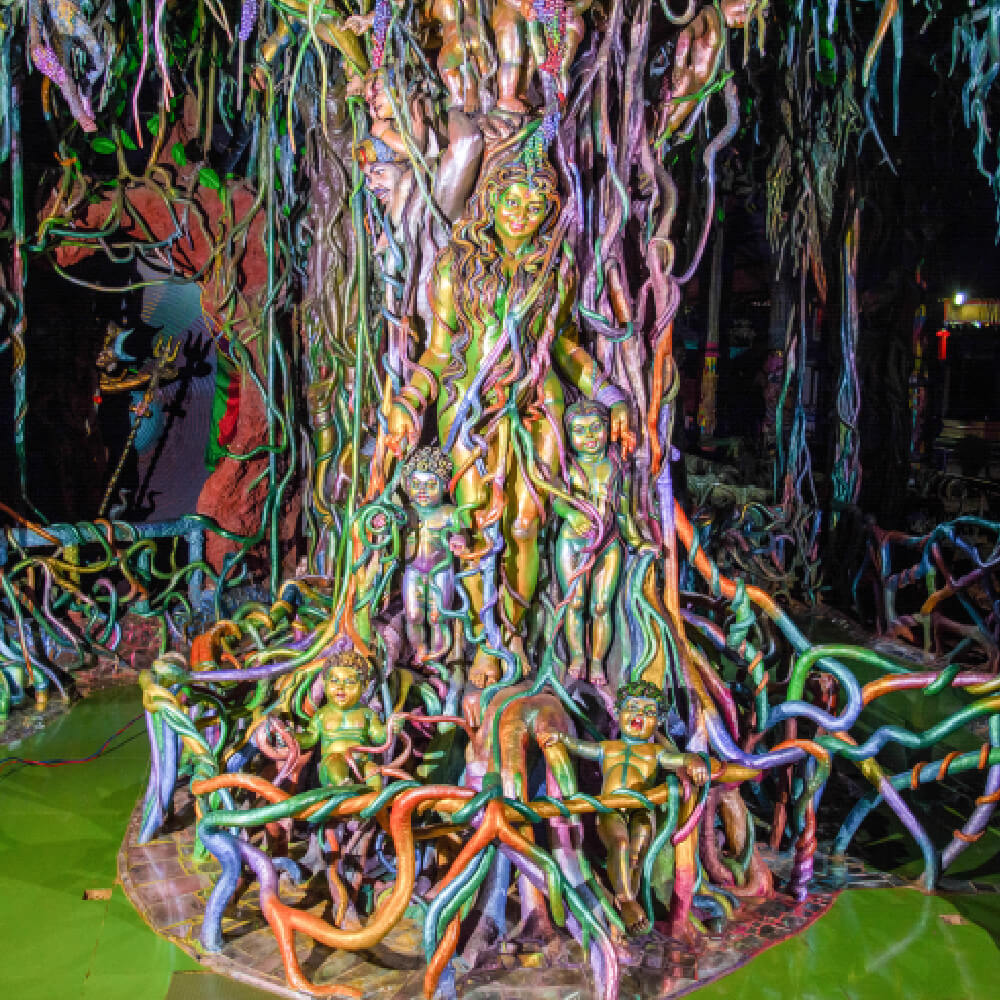
Sightseers will be enchanted as they approach the Great Banyan Tree, a creative tribute to three legendary Karnataka artists — Dr. M. V. Minajigi, Shri D. V. Halabhavi, and Shri T. P. Akki. Before independence, they established Fine Arts Colleges that nurtured artists and teachers now serving worldwide. These stalwarts also helped found the Lalitakala Academy. The tree symbolizes Mother Nature, with hidden figures of a mother and children among roots and branches. Birds, snakes, and monkeys add life to the scene. Its roots represent knowledge, showing how art, like the tree, spreads joy and beauty across the world.

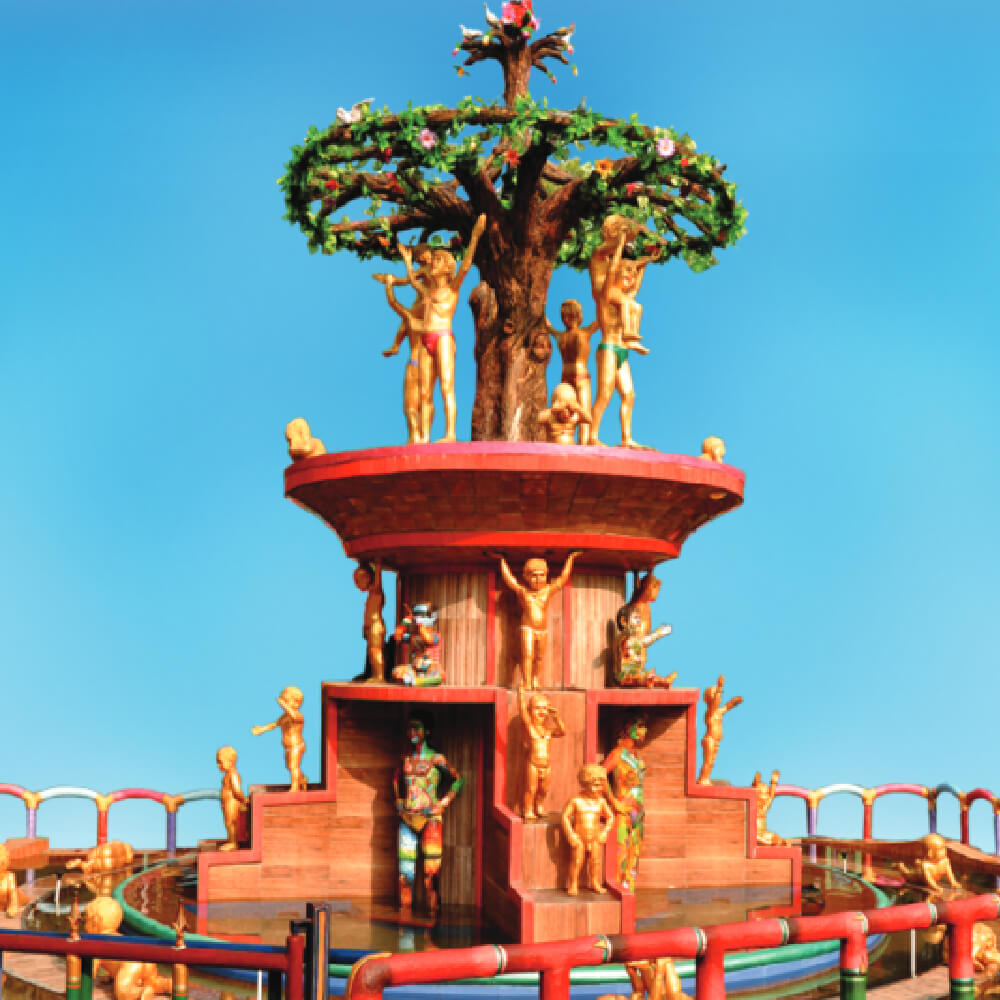
Sculpture Fountain

It is not only a Water Fountain but also it reveals the hidden message to mankind to protect the nature and allowing the other creatures to live. It discloses diverse postures of infants, toddlers and teenage children enjoying in water and nature. Along with them, tree and birds have been created to elucidate the relationship between nature, creatures and human being.

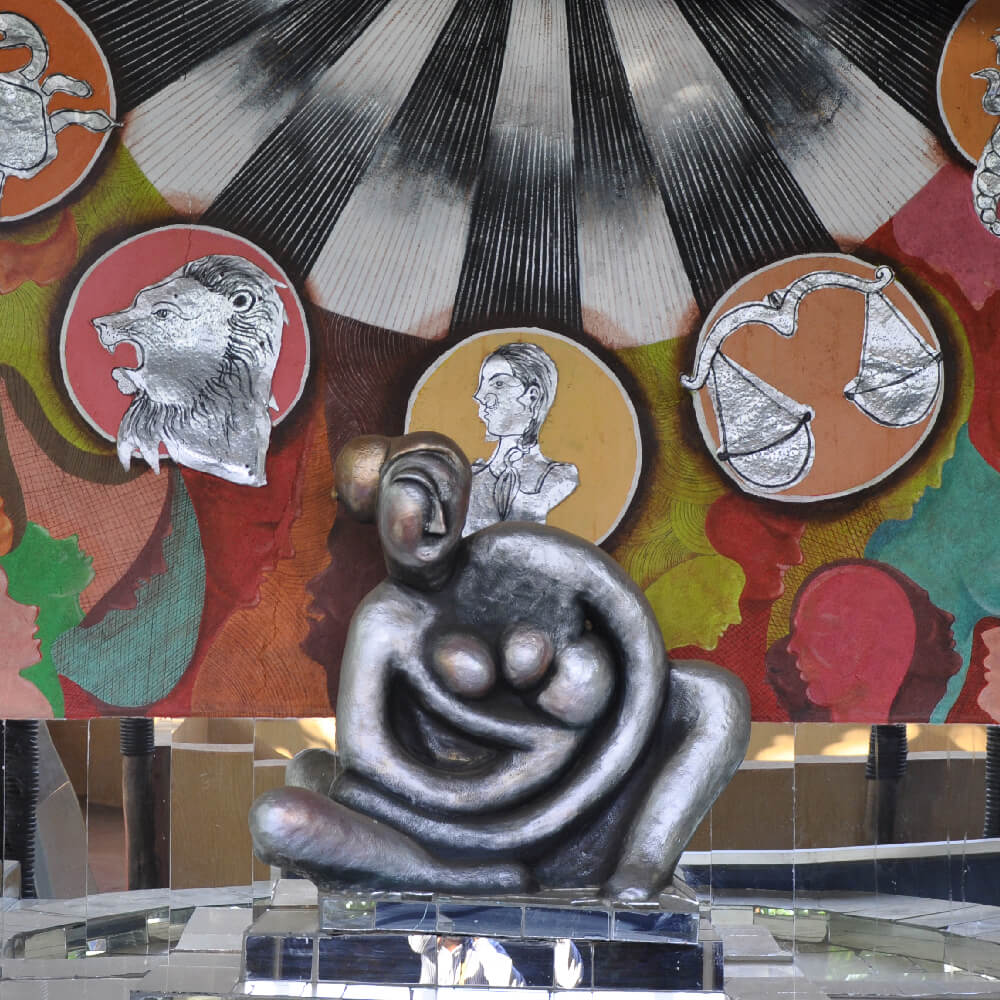
Modern Art Gallery

The Indoor museum consists of quite a lot of contemporary sculptures of international quality and huge ceiling paintings. Every work has been installed in a unique way with beautiful settings. The abstract sculptures interpret various social thoughts to the public.

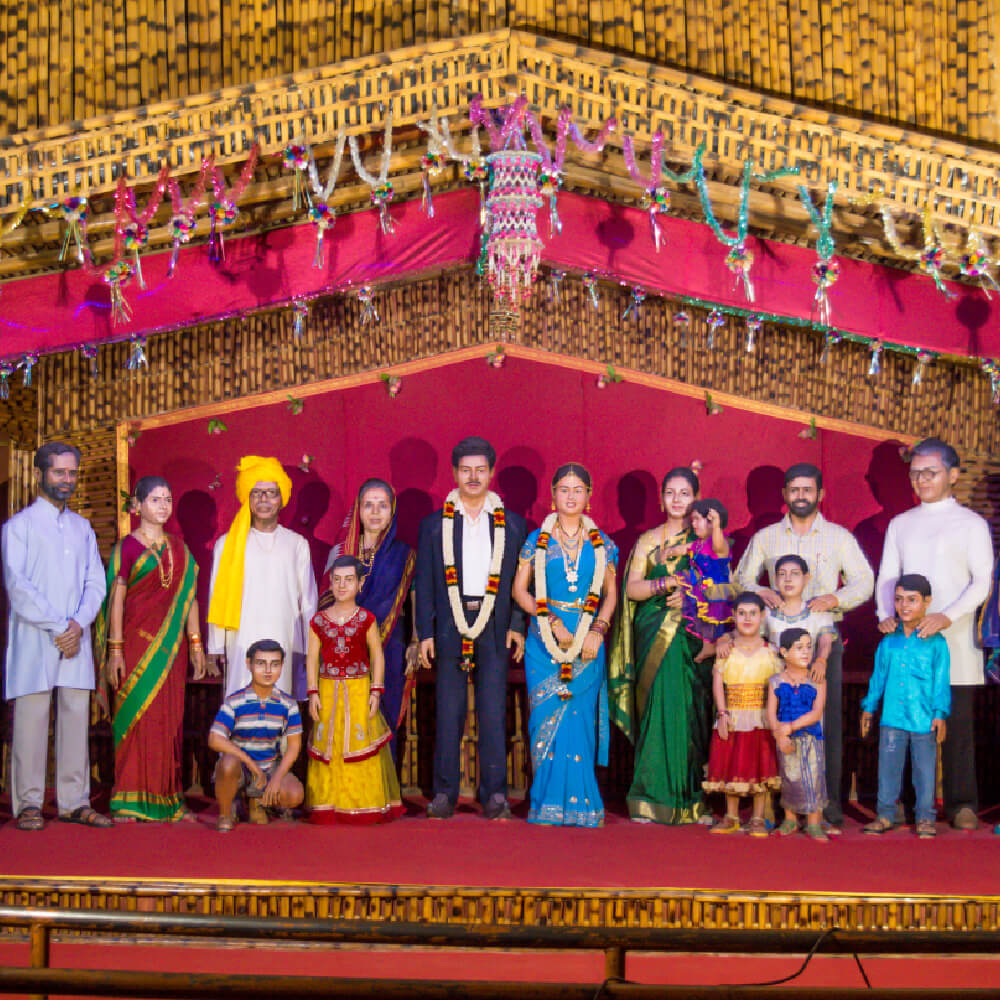
Marriage Museum

Here, visitors can experience the celebration of marriage through photographs. The wedding traditions of religions such as Islam, Christianity, Shaivism, Vedic, Jainism, and their sub-sects can be seen here. The Marriage Exhibition Hall has emerged as a grand timeless creation in the form of an installation model.

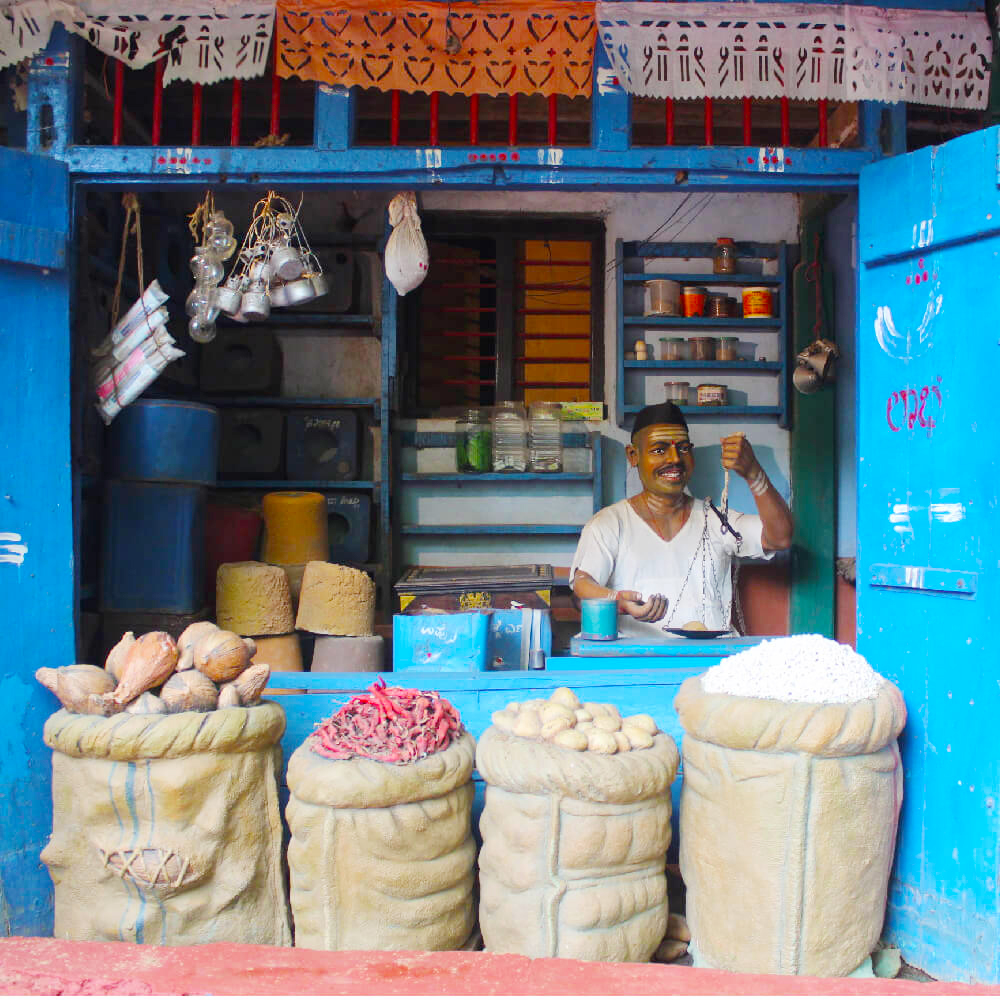
Typical Indian Village

The main attraction of Utsav Rock Garden is the depiction of a typical Indian village, highlighting the self-reliant lifestyle of our ancestors. It showcases traditional occupations such as carpentry, blacksmithing, astrology, goldsmithing, pottery, weaving, bed making, barbering, cobbling, shopkeeping, and tailoring. It also portrays women engaged in daily chores like cooking, pounding, grinding, stitching, and fetching water. The exhibit primarily focuses on farmers’ lives and their dreams. The symbolic village is interpreted from two perspectives: one showing the self-sufficient economic system of the past, and the other revealing how caste, class, and profession influenced and divided social life.

Sculptures of Wild Animals

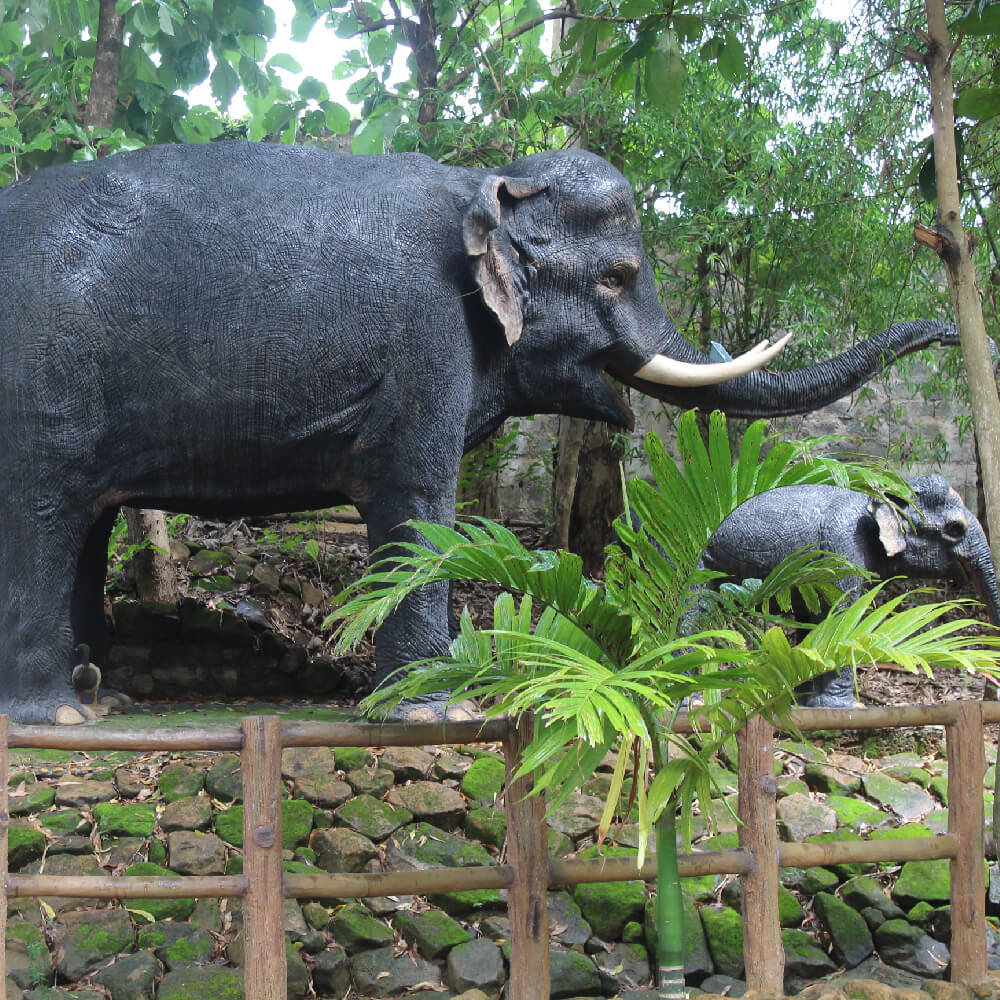
The visitors can get an opportunity to understand and enjoy wild animals through sculptures at this point. Human beings are always eager to look at, get information about wild animals and their life in the forest. A forest like environment has been created to explore the world of wild animals. They have been presented in a very realistic approach. The visitors will be puzzled at whether they are alive. The open air Animal Museum has various wild animals like Lion, Tiger, Deer, Rhinoceros, Camel, Elephant, Zebra, etc which are put on view in the forest like developed atmosphere and of course, It will be an educational tour for the kids and parents

Cattle Market

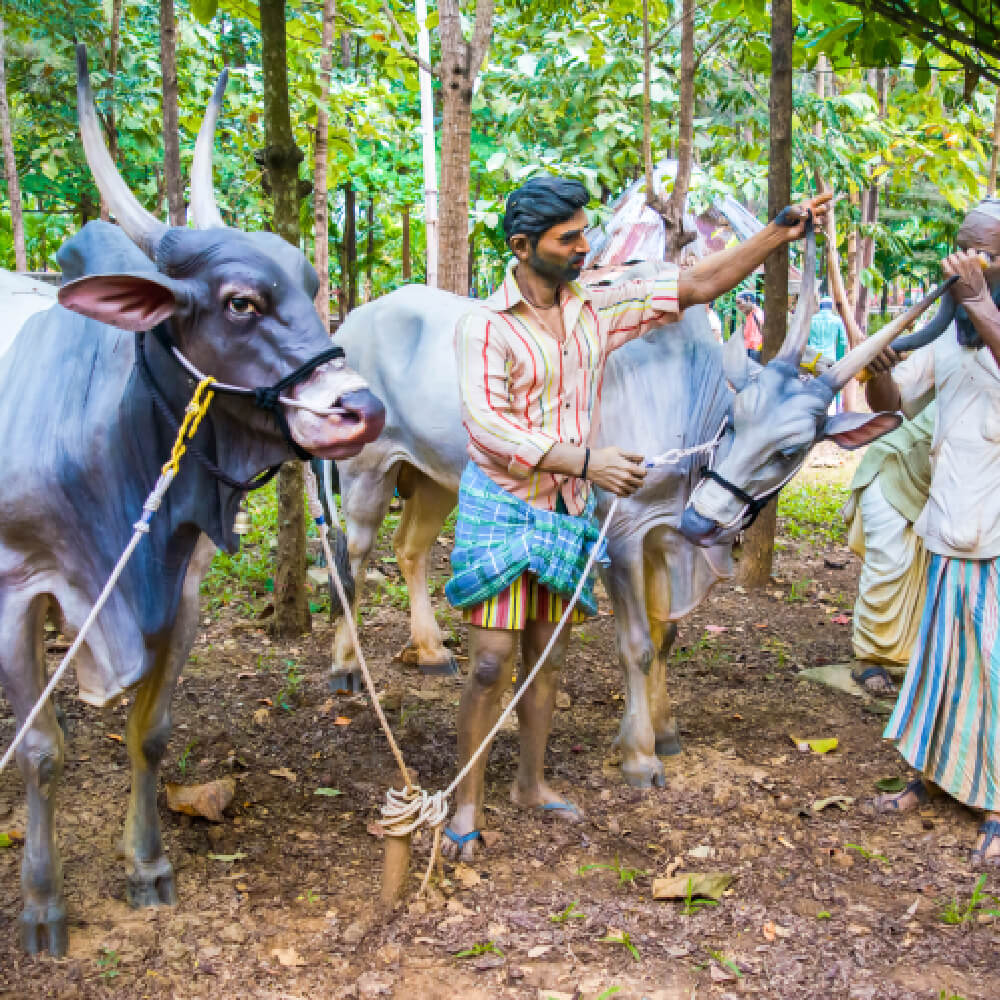
Cattle Market scenes are also an attractive component of the garden. The cattle play important role in Indian rural economy and without cattle one cannot imagine the Indian agriculture and rural life. They are worshipped as their deity, as their livelihood completely depends on them. Farmers look after them as their family members. Bullocks, buffaloes and cows of various breeds have been perfectly put on show. The farmers and brokers who are in traditional dress engaged in selling and buying using sign language to negotiable the price of the cattle and examining bulls' teeth to judge their age has been commendably presented here and the visitors will be spellbound to glimpse this pictorial presentation

Folk Market

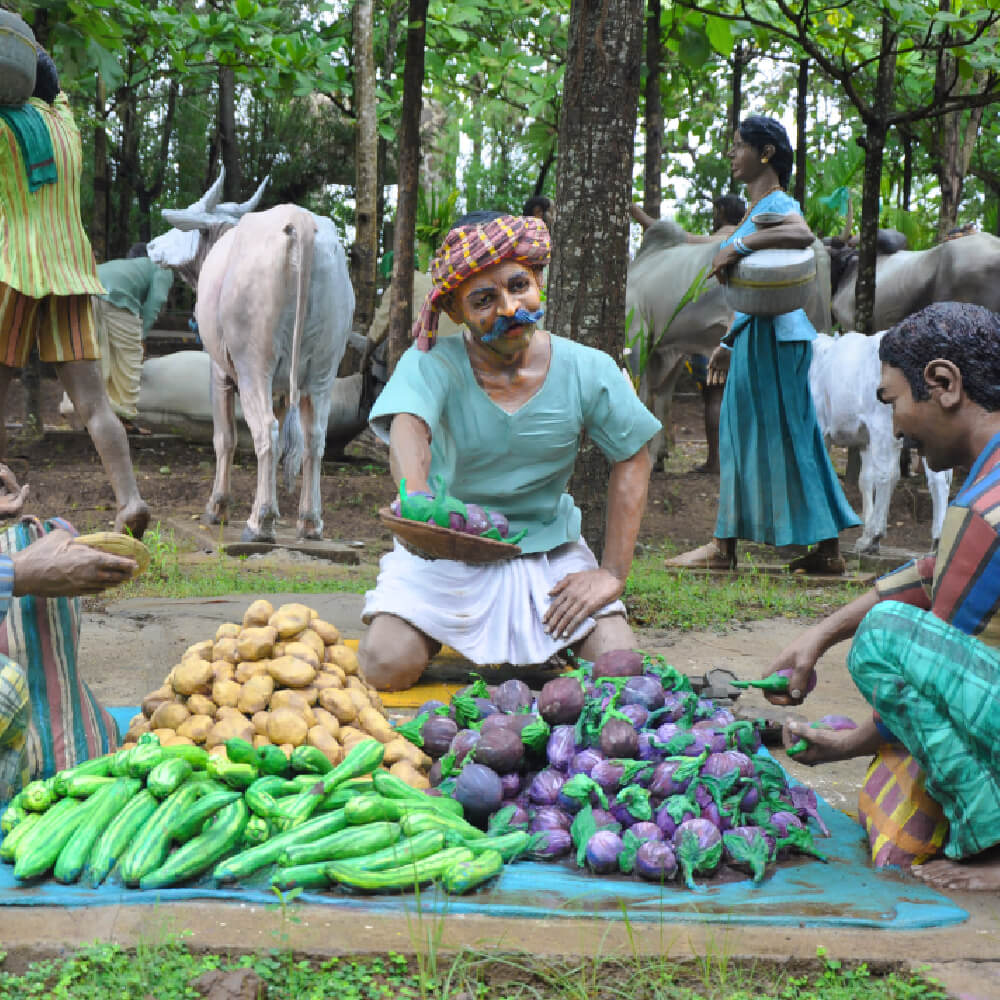
The markets in India play a fundamental role in the survival and livelihood of rural India. They provide the platform of earning for thousands of farmers and traders as well as source for availing all basic commodities. People can get all materials under one roof and a variety of choices for buyers have been produced. It provides various things which are essential to life. The tourists would be excited to see the fabulous recreation of weekly market scene, sellers and buyers of different type of vegetables, fruits, nuts, spices and other things. The scene of people in different dresses engaged in purchasing household materials, carrying luggage are all delightful to see. Rural markets are considered as the learning centers of the economic, social and cultural activities.

Sculptures of Rural Games

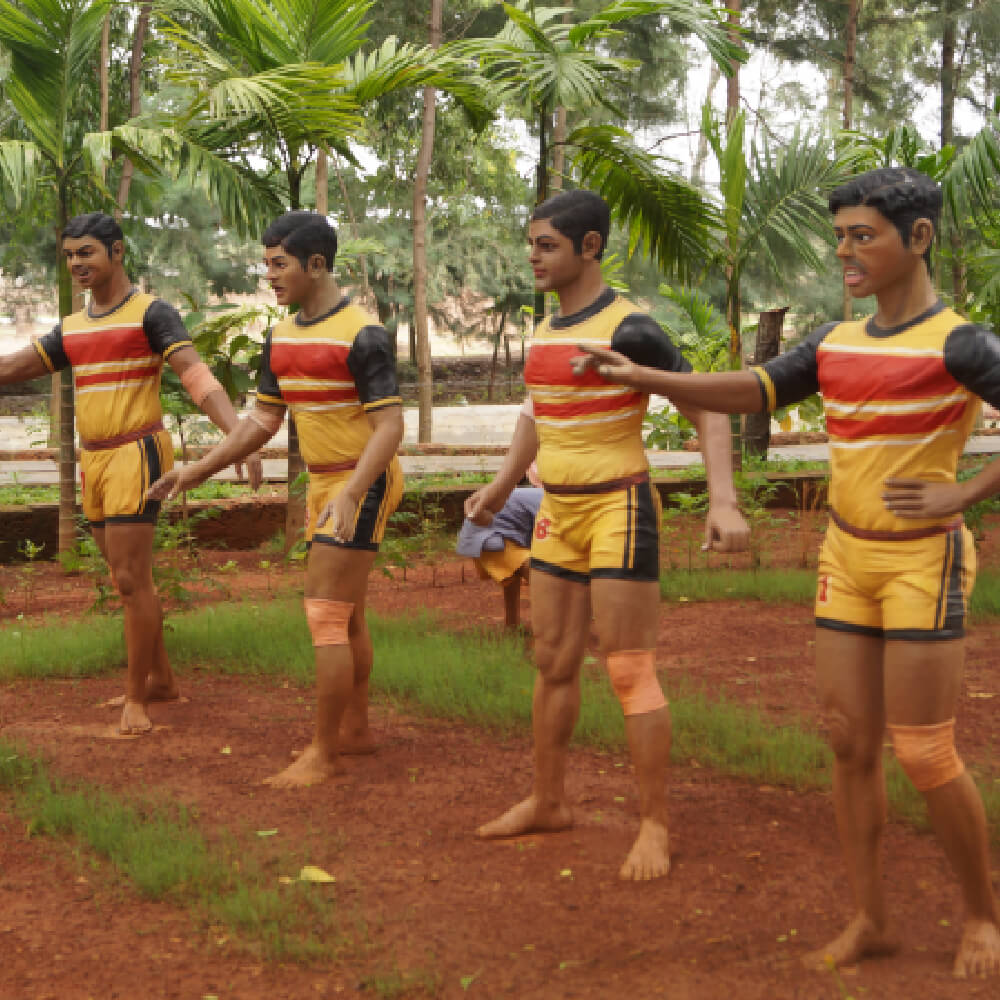
Games have always been an essential part of Indian rich culture and history. Our ancient Indian people gave much value to indoor and outdoor games. Since ancient times, games have been played in India for recreation of mental and physical fitness. In the modern-day time, we have almost forgotten the traditional games which took birth in ancient Indian soil and many of which are still actively played throughout the world. At this junction, you can take a look at some of those traditional games which have been presented through sculptures. The images like Chinnidandu, Lagori, Goligunda, Kabaddi, Mallakamba, Kuntebilleetc have been finely created. These scenes bring to mind our older childhood memories and make us drawn towards sweet older times.

Traditional Farming

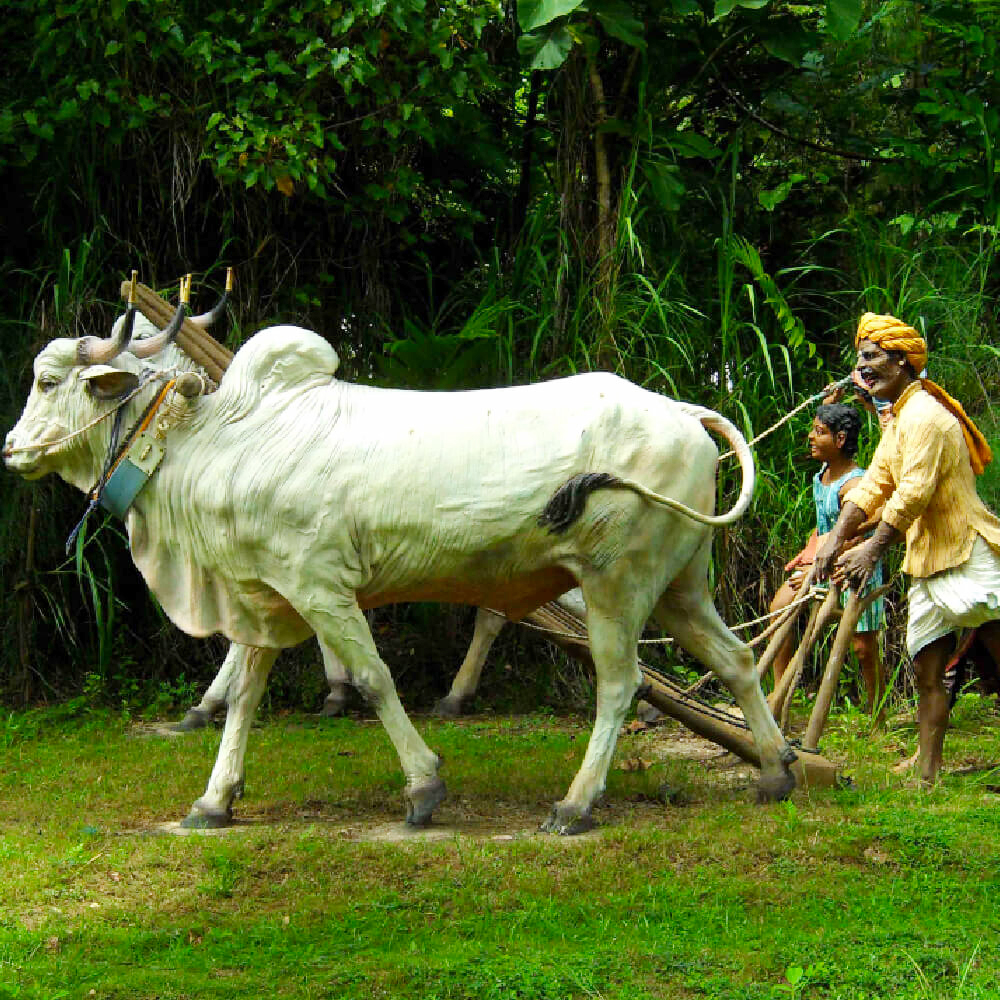
Traditional farming has been the backbone of India's rural economy, providing employment and sustaining livelihoods for generations. Earlier, farmers relied on indigenous methods, using bullocks of local breeds and wooden tools. Families played a key role in agriculture, guided by deep traditional knowledge—organic fertilizers, pest control, seed preservation, and water management. Today, much has been replaced by modern technology like tractors and advanced tools. However, this platform revives and showcases traditional practices through art. Visitors can witness lifelike sculptures of bullocks, traditional implements, and family involvement, offering a unique glimpse into India’s agricultural heritage and the beauty of rural life.

Animal Farming

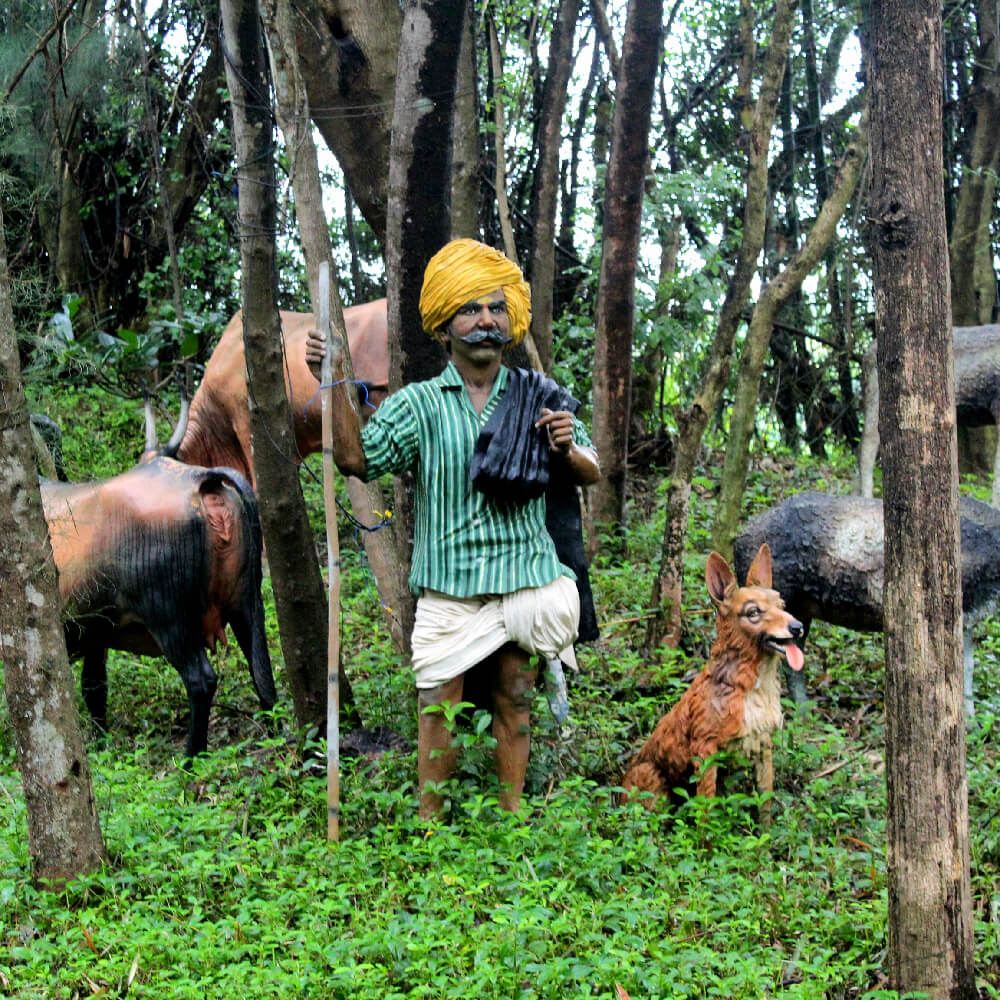
Animal Farming Animal husbandry has been an integral part of rural Indian life, supporting livelihoods and providing regular income. Referred to as Grameena Panchamruta, five key animals—cow, buffalo, goat, sheep, and hen—symbolize purity and sustenance, much like the five elements in the sacred Panchamruta. Sculptures in natural settings depict these practices, highlighting their role in providing milk, meat, eggs, wool, and manure. Livestock also serve as “moving banks” in times of need. This exhibit celebrates the mixed farming system where crop and livestock farming complement each other, showcasing rural self-reliance, social security, and the deep connection between life and land.

Means of Folk Transportation

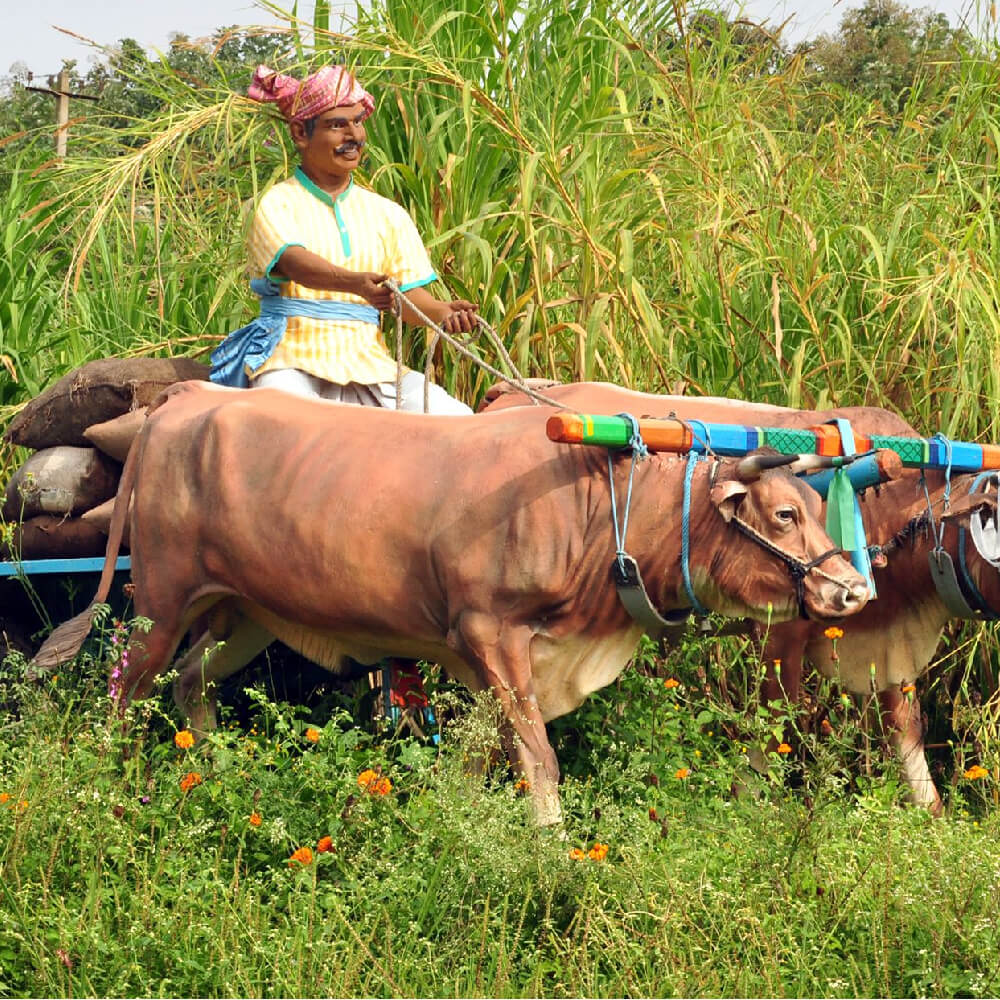
Folk Transportation showcases the oldest, eco-friendly means of travel once common in rural India. Walking and animal-drawn carts were primary modes, now mostly unknown to urban youth. Sculptures of buffaloes, bullocks, horses, mules, and humans with traditional carts vividly depict this history. The ancient Bandi, a buffalo-drawn cart, is uniquely presented, showing its structure, wheels, and seating. The evolution of transport is illustrated—from the Bandi to wooden carts, EkkaGadi (single ox cart), and modern steel carts. This exhibit highlights the transformation of rural mobility and offers visitors a fascinating glimpse into India’s rich heritage of traditional transportation.

Traditional Doors

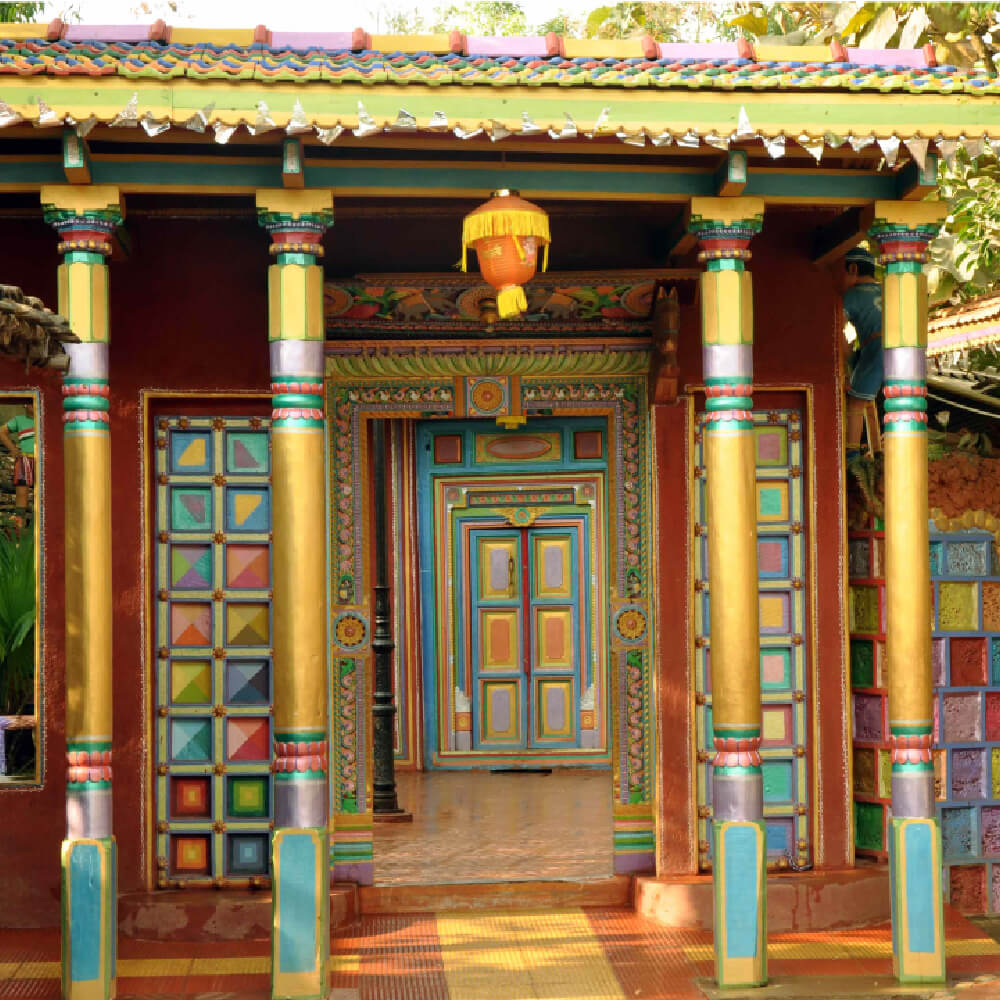
The diverse and unique traditional doors of the people of North Karnataka are displayed here, representing the intricate carving skills of our ancestors.

Model Dairy

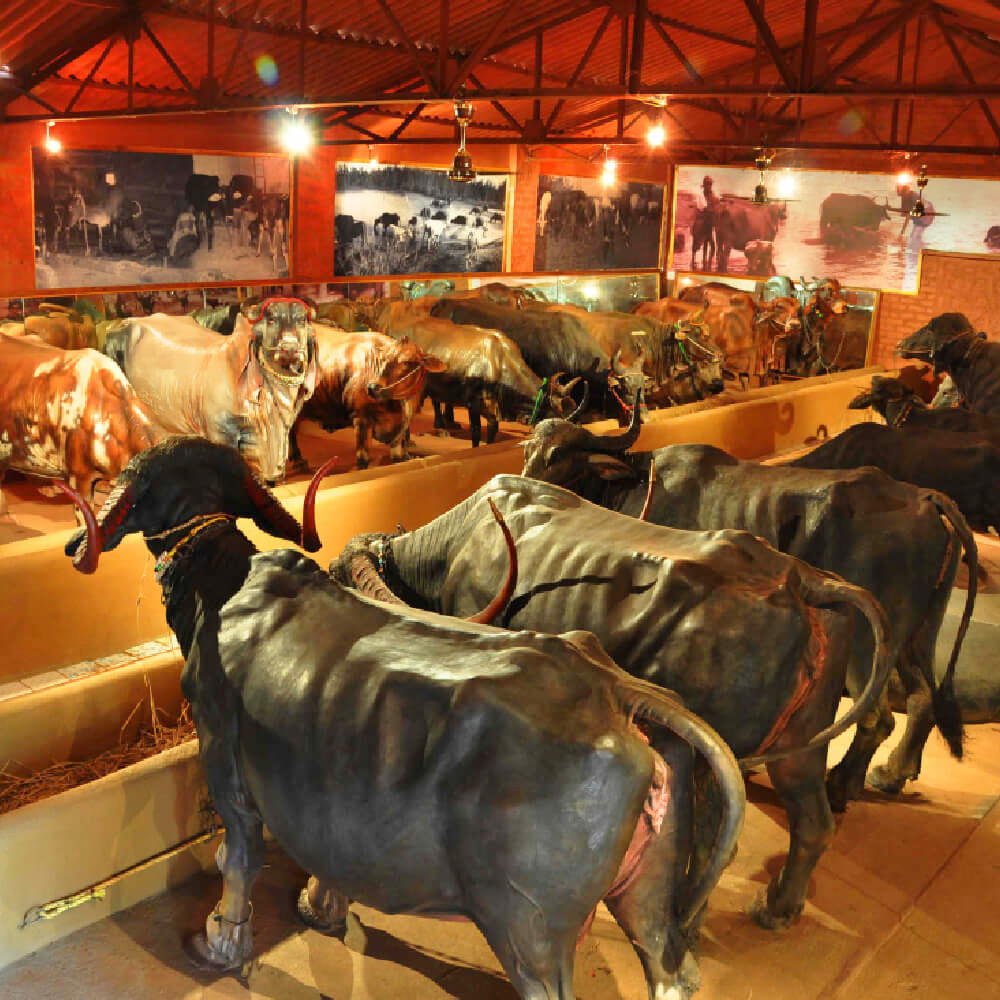
Sculptures of native cow breeds such as Deoni, Hallikar, and Red Sindhi, along with India’s pride breeds like Marathwadi, Surti, Khillari, Nagpuri, and Mhaswad Gaoli, are showcased here in a highly realistic manner. These works of art, created to world-class standards, are so lifelike that they seem to outshine real animals, captivating the eyes of the visitors.

Tribal Sculptures

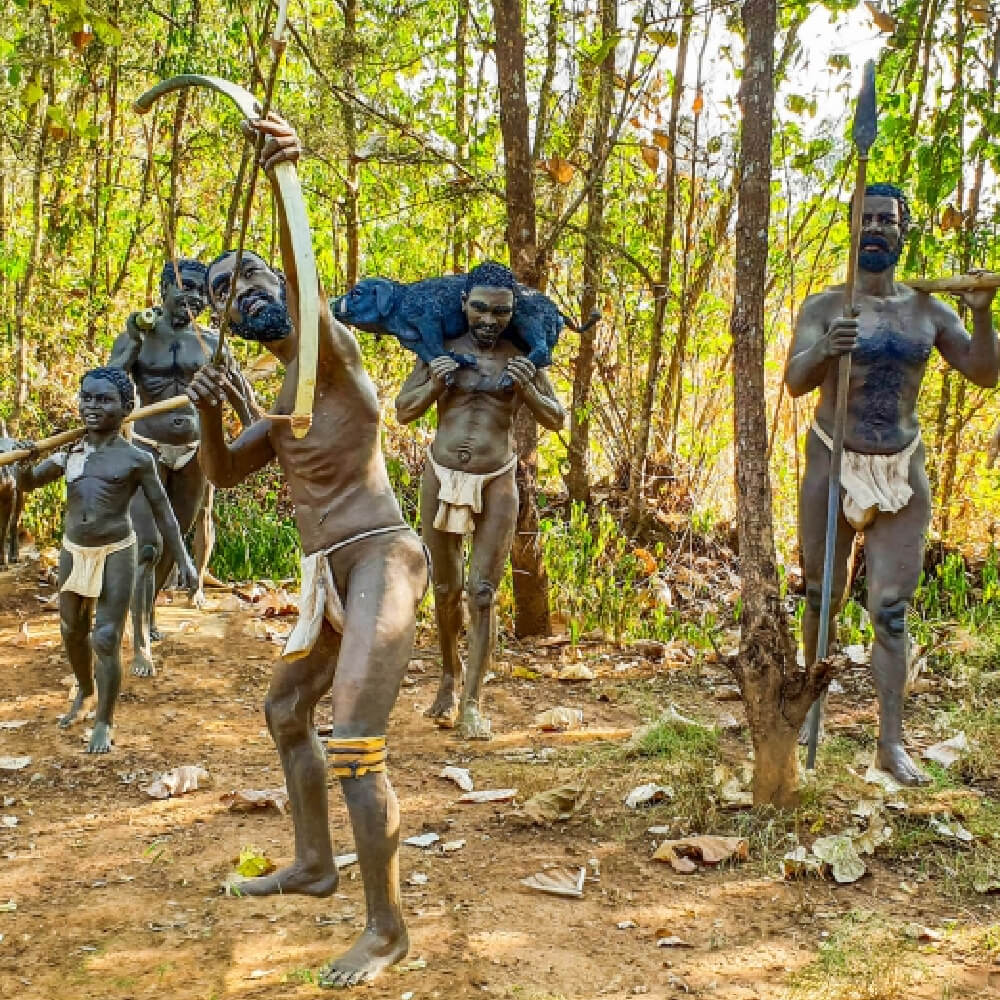
The lifestyle of tribal people is depicted through sculptures, showcasing scenes such as hunting, herding animals, cooking, women engaged in household chores, collecting firewood, and children playing. Altogether, these sculptures portray the everyday life and essence of tribal communities.

Flower–Butterfly Girls Park

Butterfly Girls Park beautifully symbolizes the delicate emotions and dreams of young girls through artistic sculptures. These graceful figures portray their aspirations as butterflies and birds, reflecting freedom, growth, and innocence. Womanhood is celebrated as nature itself—nurturing like the earth and blossoming like vibrant flowers. Each sculpture blends imagination with reality, capturing the poetic journey of femininity, beauty, and transformation. The park’s scenic landscape enhances this artistic vision, creating a serene, dreamlike space where art and nature coexist. It offers visitors a unique experience of wonder and harmony, honoring the gentle spirit and evolving dreams of girlhood and womanhood.